
WORK
Working with conflict, before, during, and beyond the immediate dispute.
I work with universities, organizations, communities, leaders, and conflict-resolution professionals through speaking, training, strategic advising, mediation, and facilitation.
SELECTED INSTITUTIONS & ORGANIZATIONS
SELECTED INSTITUTIONS & ORGANIZATIONS
Selected institutions and organizations connected to my teaching, training, research, and community-based conflict work include:
SPEAKING & TRAINING
SPEAKING & TRAINING
Speaking & Training
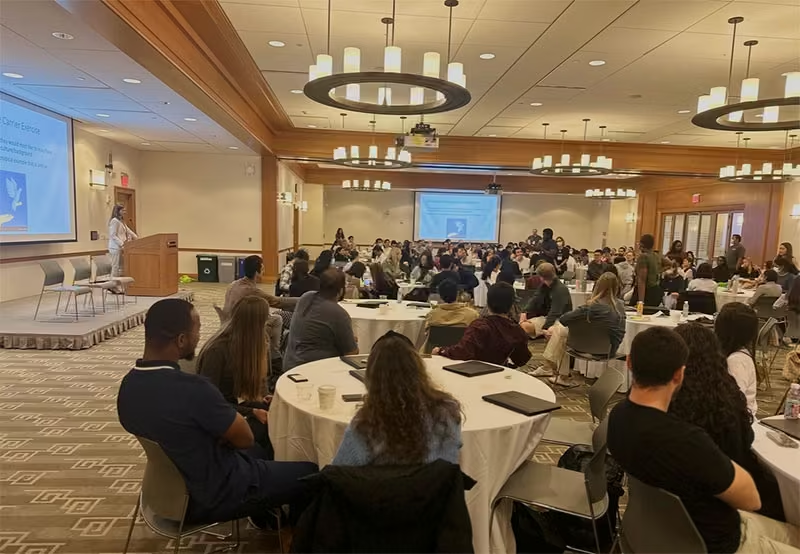
I design talks, workshops and learning experiences that connect scholarship with practical application. Programs can be adapted for conferences, universities, professional organizations, leadership programs, retreats, and institutional events. My speaking and training work includes a four-year engagement with Harvard Law School, where I have designed and taught programming for incoming LL.M. students focused on strengthening connection and collaboration across an international cohort.

SELECTED SPEAKING TOPICS
SELECTED SPEAKING TOPICS
What should conflict leave behind?
We usually evaluate conflict intervention by asking whether the problem was resolved. But what if resolution is only part of the outcome? This talk explores how the way we handle conflict can increase, or diminish, people’s capacity to navigate future disagreement and asks what it would mean to address today’s problem while building capacity for tomorrow.
Organizations often invest heavily in professionals who resolve conflict once it escalates. What would happen if they invested just as deliberately in the capacity of people and communities to engage conflict before that point? This talk examines how individual, collective, and institutional capacity interact.
Some of today’s most consequential conflicts emerge before there is a formal dispute to mediate. This talk explores the evolving role of conflict professionals as conveners, dialogue designers, systems thinkers, and bridge-builders, and the ethical questions that expansion creates.
Artificial intelligence can increase human capability. It can also replace activities through which people develop competence, judgment, meaning, and self-efficacy. This talk asks how institutions can use AI without gradually outsourcing the human capacities they most need to retain.
Awareness of unconscious bias is not enough to change behavior. Drawing on my research with Prof. David Hoffman and our interdisciplinary review of the evidence, this session examines approaches shown to reduce the influence of bias and translates them into practical strategies for professionals and institutions.
SPEAKING & TRAINING
SPEAKING & TRAINING
Speaking & Training
I design talks, workshops and learning experiences that connect scholarship with practical application. Programs can be adapted for conferences, universities, professional organizations, leadership programs, retreats, and institutional events. My speaking and training work includes a four-year engagement with Harvard Law School, where I have designed and taught programming for incoming LL.M. students focused on strengthening connection and collaboration across an international cohort.
SELECTED SPEAKING TOPICS
SELECTED SPEAKING TOPICS
What should conflict leave behind?
We usually evaluate conflict intervention by asking whether the problem was resolved. But what if resolution is only part of the outcome? This talk explores how the way we handle conflict can increase, or diminish, people’s capacity to navigate future disagreement and asks what it would mean to address today’s problem while building capacity for tomorrow.
Organizations often invest heavily in professionals who resolve conflict once it escalates. What would happen if they invested just as deliberately in the capacity of people and communities to engage conflict before that point? This talk examines how individual, collective, and institutional capacity interact.
Some of today’s most consequential conflicts emerge before there is a formal dispute to mediate. This talk explores the evolving role of conflict professionals as conveners, dialogue designers, systems thinkers, and bridge-builders, and the ethical questions that expansion creates.
Artificial intelligence can increase human capability. It can also replace activities through which people develop competence, judgment, meaning, and self-efficacy. This talk asks how institutions can use AI without gradually outsourcing the human capacities they most need to retain.
Awareness of unconscious bias is not enough to change behavior. Drawing on my research with Prof. David Hoffman and our interdisciplinary review of the evidence, this session examines approaches shown to reduce the influence of bias and translates them into practical strategies for professionals and institutions.
CONFLICT STRATEGY
CONFLICT STRATEGY
Some conflicts are larger than a single dispute.
I work with institutions and communities to understand recurring patterns, stakeholders, structures, and processes, and to determine what kind of response the situation actually requires.
Potential engagements can include conflict and stakeholder assessment, dispute-system or process review, strategic advising, community and stakeholder engagement, conflict-prevention strategy, and design of peer, dialogue, or mediation programs.

MEDIATION & FACILITATION
MEDIATION & FACILITATION
Mediation & Facilitation
I mediate and facilitate difficult conversations and collaborative processes involving relationships, organizations, communities, and institutions. My approach combines careful process design with meaningful voice and participation for the people involved.